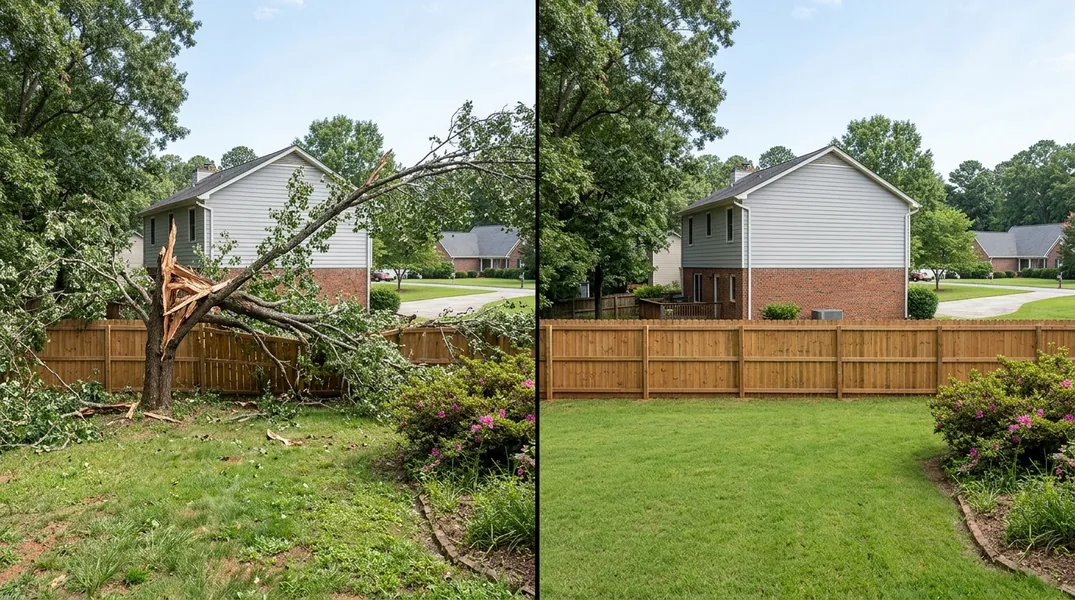
Understanding the Difference: Trimming vs. Removal
When you look at a struggling tree in your yard, the question isn't always simple: does it need Tree Trimming & Pruning, or is Tree Removal the better choice? These are two very different services, and choosing the wrong one can cost you time, money, and potentially compromise your property's safety.
Tree Trimming & Pruning is a maintenance service designed to keep your tree healthy, attractive, and structurally sound. It involves removing dead branches, crossing limbs, and excess growth to encourage better health and shape. Trimming can improve air circulation through the canopy, reduce disease risk, and enhance the tree's natural appearance. In contrast, Tree Removal is a last-resort solution for trees that are dead, dying, diseased beyond recovery, or pose an immediate safety hazard. Once a tree is removed, it's gone permanently, which is why the decision shouldn't be made lightly.
Most homeowners in Athens don't realize that many trees can be saved with proper trimming. A experienced arborist can evaluate your tree and determine whether intervention or removal is truly necessary. This assessment is one of the most valuable services an arborist provides, because it can save you from an unnecessary expense while protecting your landscape investment.
Signs Your Tree Needs Trimming, Not Removal
A healthy tree that simply needs some attention will typically show signs that trimming can address. If your tree has dead or diseased branches, but the main trunk and root system are still vital, trimming is almost always the right choice. Look for branches that don't produce leaves in spring, limbs that are crossing or rubbing against each other, or growth that's blocking your view or encroaching on your roof or power lines. These are all classic reasons to call a professional for pruning services.
Trees that are growing too close to structures, sidewalks, or driveways often benefit from strategic trimming rather than removal. A skilled arborist can thin the canopy to reduce weight on one side, remove branches that threaten your home's gutters or siding, and shape the tree to work better with your property layout. Young trees with multiple competing leaders (stems) should be pruned early to develop a strong, single main trunk. Storm damage, while sometimes severe, often doesn't require complete removal. If the main trunk is intact and the tree is otherwise healthy, removing broken branches and allowing the tree to compartmentalize the wound is usually the best approach.
Another important indicator is whether the tree is producing new growth. If you see fresh leaves, new shoots, or signs of vigorous growth despite some problem areas, the tree likely has plenty of life left. A professional arborist in Athens can assess the ratio of healthy to unhealthy wood and recommend trimming as a restorative measure.
When Tree Removal Near Me Is the Only Safe Option
Sometimes, despite our best efforts, a tree has reached the end of its life or poses too great a risk to keep standing. Dead trees are the most obvious candidate for removal. A completely dead tree has no leaves, no new growth, and brittle branches that can fall without warning. Dead trees attract insects and fungi, and they become increasingly unstable as decay progresses. If you tap the trunk with a hammer and it sounds hollow, or if the bark is sloughing off in large sections, the tree is likely beyond saving.
Trees with severe disease or pest infestations may also need to come down. Some diseases, like Dutch elm disease or certain cankers, can spread to nearby trees if left untreated. If an arborist determines that disease has compromised the structural integrity of the tree or that treatment won't be effective, removal is the responsible choice. Similarly, trees infested with invasive pests that can't be controlled may need to be removed to protect other vegetation on your property.
Safety is another critical factor in the removal decision. A tree that leans significantly, has a split or cracked trunk, or has major structural defects poses a genuine hazard. If the tree is close to your home, a power line, or a neighbor's property, and it shows signs of instability, removal is the safest option. Trees with extensive root damage, erosion around the base, or those growing at dangerous angles should be evaluated immediately. If you're uncertain about a hazardous tree on your property, don't hesitate to contact Athens Tree Service at (762) 400-0385 for a professional assessment.
How an Arborist Makes the Decision
A experienced arborist uses a systematic approach to determine whether your tree can be saved or should be removed. The assessment typically begins with a visual inspection of the entire tree, from the roots (if visible) to the crown. The arborist looks for signs of disease, pest damage, structural defects, and overall vigor. They'll examine the bark for cankers, oozing sap, or areas of damage. They'll inspect the canopy for the percentage of live branches, the presence of new growth, and any signs of decline.
The arborist will also consider the tree's location and its value to your landscape. A mature oak or maple that's been part of your property for decades may be worth significant effort to preserve, even if it requires substantial pruning. A small, young tree that's diseased might be worth removing to make room for a healthier specimen. The proximity to structures, utilities, and property lines also influences the decision. A tree that's growing into your roof or threatening power lines may need removal for practical reasons, even if it's not dying.
One important tool arborists use is the CODIT (Compartmentalization of Decay in Trees) model, which explains how trees naturally wall off damaged areas. If the tree has the vigor to compartmentalize wounds effectively, trimming and pruning can work. If the tree is weak or stressed, it may not be able to heal properly, making removal the better option. Additionally, arborists assess the tree's species and age. Some species are more prone to disease or storm damage, and very old trees may have limited years ahead even if they're currently healthy.
The Cost Factor: Trimming vs. Removal in Athens
When homeowners consider their options, cost is often a significant factor. Tree Trimming & Pruning is generally far less expensive than Tree Removal, which makes it an attractive option when it's appropriate. A routine trimming might cost anywhere from a few hundred to over a thousand dollars, depending on the tree's size and the complexity of the work. Regular trimming every few years can prevent problems from developing and extend your tree's life significantly.
Tree Removal, by contrast, involves felling the tree, cutting it into sections, removing debris, and often Stump Grinding to eliminate the stump. This is considerably more expensive and labor-intensive, especially for large trees. However, it's important to remember that an unsafe tree can cause far greater damage if it falls unexpectedly. Delaying removal of a hazardous tree isn't a cost-saving measure; it's a risk that could result in property damage, injury, or liability issues.
For an accurate understanding of what your specific situation will cost, it's best to get a professional evaluation. Athens Tree Service offers a free estimate so you can understand your options and their associated pricing before making a decision. This consultation gives you the information you need to make a wise choice for your property and budget.
What to Do Next: Getting Professional Guidance
If you're uncertain about the health or safety of a tree on your property, the best step is to call a qualified arborist for an evaluation. A professional can answer your questions, explain the condition of your tree in clear terms, and recommend the most appropriate course of action. Whether your tree needs trimming, removal, or simply monitoring, an expert opinion is invaluable.
Athens Tree Service has been helping homeowners make these decisions for years. Our arborists understand the local climate, common pests and diseases, and the specific challenges that trees face in this region. We're committed to giving you honest advice, whether that means recommending a preservation strategy or explaining why removal is necessary. If you're ready to get started, reach out to us at (762) 400-0385 or visit our website to request a free estimate. We serve Athens and the surrounding areas, and we're here to help you care for your trees the right way.
Looking for a professional tree service contractor in Athens? Athens Tree Service responds fast for all your tree service needs.
Get a Free QuoteOur services: Tree Removal · Tree Trimming & Pruning · Stump Grinding